Little Did I Know: Catching My First Brute-Force
There was one IP on the network, and it was answering on port 22.
That was all I had. No password, no username worth trusting, no idea what was behind it — just a box sitting quietly on an address I’d found, with SSH open like an unlocked door at the end of a hallway. I had to know what was on it.
So I did the unsubtle thing. I pointed myself at the login and started guessing — name after name, straight down the list, the terminal throwing the same rejection back at me each time. Permission denied. Again. Permission denied. Again.
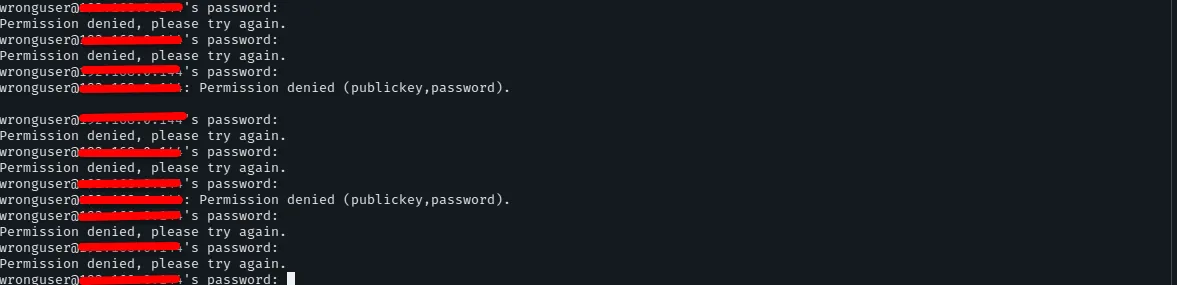
Twenty-nine tries in, I stopped. The box wasn’t giving. Whatever was on it would stay a mystery. No harm done — just another server that didn’t feel like talking. I closed the terminal and moved on.
Except the box was talking. Just not to me.
Every one of those attempts had been picked up, parsed, and filed the moment it landed. The Ubuntu server I’d been hammering had a Wazuh agent on it, quietly shipping every failed login off to a manager that was building a very tidy record of exactly what I’d just done — timestamped down to the second, all of it landing inside a two-second window just after 10:53.
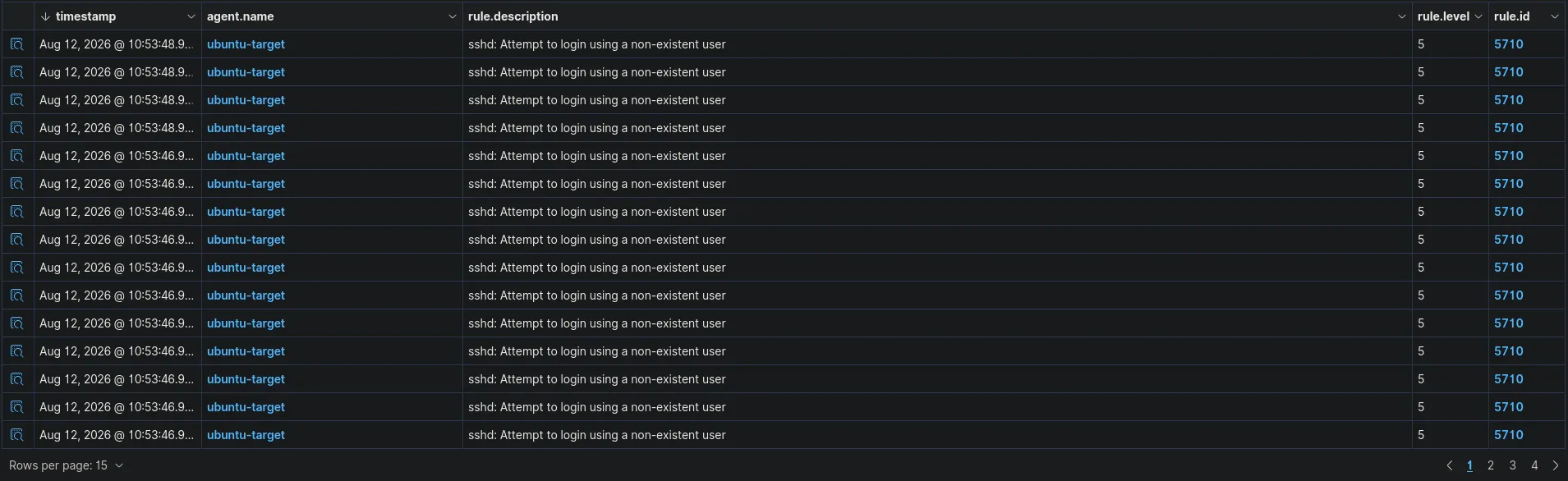
Rule 5710, level 5, over and over: sshd: Attempt to login using a non-existent user. I hadn’t even been guessing passwords for a real account — I’d been throwing usernames at the door that were never there in the first place, and the box noted down every single one.
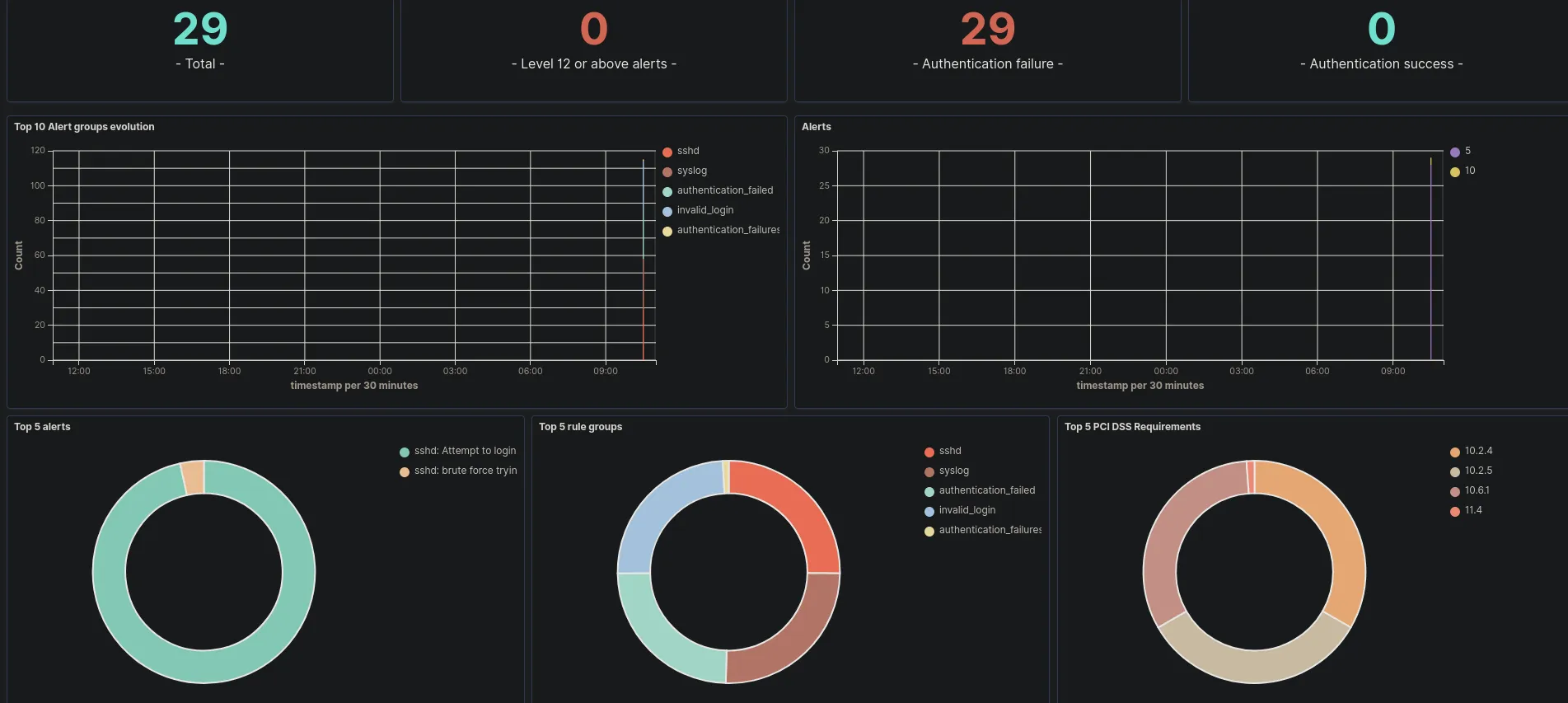
Twenty-nine total events. Twenty-nine failures. Zero successes. The detection I’d built to catch exactly this kind of thing had done its job on the first real try — right down to naming the technique and fingering the agent it came from.
The victim was mine. The attacker was me. I’d built this whole thing — Proxmox on the metal, an Ubuntu VM on top of it, a Wazuh agent on the VM reporting home — and then walked straight into my own trap to see if the trap worked.
It did.
That’s the whole point of this one. It wasn’t a sophisticated attack — twenty-nine manual guesses at a box that was never going to open. But it was recorded, correctly identified, and attributed, and that’s the win I was actually after.
What’s next: a Kali VM as a proper attacker box, and some real defence-in-depth hardening to make the victim less of a pushover. Further out, I want to build a purple-team setup and run simulations against myself — and eventually hand the attacker’s side to an AI and see what it does. That last one has me a little too excited.
For now, I’ll take it: I set up a victim, attacked it, and caught myself in the act.